Construction Equipment Checklist: What You Need Before You Start
Summary: A construction equipment checklist helps prevent costly delays by ensuring the right machinery is available for every stage of a project, from site preparation and excavation to foundations, structural work, and safety requirements. Proper planning includes selecting essential equipment such as excavators, compactors, cranes, power tools, generators, and protective gear while considering whether renting or buying is the best option. Reliable equipment support from DCM HIRE helps contractors reduce downtime, improve productivity, maintain safety standards, and keep projects running efficiently.
Introduction
Ever stood on a muddy lot at 6:30 in the morning with guys on the clock, just waiting for a digger to finally show up? It burns cash incredibly fast. You can practically hear your project margins evaporating into the cold morning air while subcontractors drink coffee and look at their watches.
Poor planning and missing tools actually cause about 40% of all site delays across the entire construction industry. Nothing stalls a build quicker, or frustrates a site manager more, than an idle crew of highly paid tradesmen leaning on their shovels because the groundwork machinery got delayed in transit or the wrong attachment was delivered.
To avoid those brutal logistical bottlenecks and keep the site moving aggressively from the minute the perimeter gates open, you need a solid construction equipment checklist ready from day one. You cannot just guess what building construction equipment you need as you go. .
What equipment is needed to start a construction project?
- Site Preparation & Earthmoving Equipment
- Foundation & Concrete Work Machinery
- Structural, Lifting & Material Handling
- Essential Power Tools & General Site Equipment
- Construction Site Safety Gear
Why Trust DCM HIRE for Your Project Planning?
We don’t just drop off machines, hand you a greasy rental invoice, and drive away to the next job. We’ve spent years outfitting sites from tight, restricted-access urban lots to huge commercial retail builds, actively bridging the gap between your ambitious blueprints and the harsh realities of site logistics. Operating extensively, we know exactly how unforgiving the local clay and unpredictable winter weather can be on heavy iron and construction schedules.
Last month, a local groundwork contractor was bleeding money due to delayed site prep. Their wheeled machines were sinking up to the axles in wet mud, ruining their haul roads. We went out there, swapped their entire setup for low-ground-pressure tracked machines, got the right gear on site within hours, and clawed back a full week of their schedule. Every single piece of plant on our construction machinery list that we send out is rigorously tested, fueled, fully safety compliant, and ready to work the absolute second it rolls off the low-loader.
Phase 1: Site Preparation & Earthmoving Equipment
Heavy Machinery for Excavation
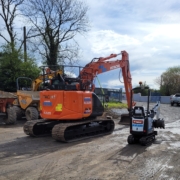
Crawler excavators handle the genuinely heavy digging in deep, nasty muck. Because they run on continuous steel tracks, they distribute their operating weight perfectly, giving operators the raw breakout force needed to rip through compacted soil without getting bogged down in the mud.
Wheeled versions, on the other hand, won’t chew up expensive asphalt when crossing streets, making them ideal for utility tie-ins on finished residential roads. Bulldozers and backhoes quickly clear the subgrade, push topsoil into neat bunds, and prep the site before you even think about pouring concrete.
When you are looking into excavator hire options, you must match the track footprint and tail swing to your site access limits. Booking a heavy 13-tonne machine is totally useless if your site gates only safely clear an 8-tonne mini digger.
Surveying & Leveling Tools
Eyeballing your trenches never works, and it usually ends up costing you thousands in wasted concrete or smashed utility pipes. You have to use robotic total stations, highly calibrated laser levels, and GPS gear to nail your boundaries accurately from the start.
A good rotary laser level allows your groundworkers to cut the trench depths perfectly on the very first pass, meaning you aren’t paying guys to manually backfill and re-compact trenches that were dug six inches too deep by a careless machine operator.
Phase 2: Foundation & Concrete Work Machinery
What equipment is used in the foundation stage?
To get your foundation poured right and pass your strict building control inspections, the equipment needed for building construction includes excavators for digging precise trenches, heavy plate compactors for stabilizing the loose dirt, transit mixers for bulk material delivery, and reliable concrete pumps paired with industrial vibrators to violently shake out trapped air pockets.
Compaction & Concrete Pouring
Plate compactors and ride-on trench rollers lock the dirt down tight. If you skip proper soil compaction, or rush it with lightweight gear, your sub-base will inevitably settle after the build is finished. That settlement causes the expensive brickwork and slabs above it to crack, leading to massive structural repair bills.
Once the ground is rock solid and signed off, then comes the pour. Transit trucks bring the volume from the batch plant, but you often need a boom pump to literally launch that heavy slurry over perimeter fences, dodging trees, and directly into the deep trenches. Mastering concrete pouring techniques means using high-frequency poker vibrators immediately as the concrete hits the trench. It aggressively shakes the wet concrete so it flows seamlessly around the dense steel rebar cages, completely stopping honeycombing and preventing brittle voids from destroying your structural integrity.
Phase 3: Structural, Lifting & Material Handling
Cranes and Hoisting Equipment
High-rises and huge commercial blocks obviously demand tower cranes anchored into deep concrete footings. They take days to build, require heavy logistics, but they offer incredible reach across a massive site. But for standard residential framing, timber-framed housing estates, or retail shells, a mobile all-terrain crane is plenty fast and significantly cheaper. A mobile crane can drive onto your site in the morning, drop its heavy hydraulic outriggers onto rated spreader mats, lift twenty heavy roof trusses into place with pinpoint accuracy, and be gone before the sun goes down.
Access Equipment
Bring in modular scaffolding, indoor electric scissor lifts, and rough-terrain diesel boom lifts so framers and roofers can safely reach tricky rooflines without relying on sketchy ladder setups. Ladders are slow, highly dangerous, and a liability on a busy commercial site. A good diesel cherry picker allows your operatives to navigate deep mud and boom right over open foundation trenches to fix exterior cladding or guttering securely, vastly speeding up the timeline.
Essential Power Tools & General Site Equipment
You rarely have reliable grid power initially when you break ground on a fresh plot. You will definitely need heavy-duty towable diesel generators and towering light plants to keep the welfare cabins running and start your shifts early in the dark winter months. Don’t forget to stock up on industrial welding machines, diamond-blade masonry saws for the bricklayers, and heavy-duty submersible water pumps. Dewatering is huge out there in the real world. One bad overnight rainstorm will flood your trenches entirely, turning your site into a swamp, without pumps ready to throw in the water the second the crew arrives in the morning.
Construction Site Safety: PPE & Hazard Prevention
Mandatory Personal Protective Equipment (OSHA Compliant)
OSHA regulations are incredibly strict, and for very good reason. High-impact hard hats, steel-toe or composite boots with puncture-proof soles, and high-vis vests are completely non-negotiable for anyone stepping foot on the dirt. Running through a comprehensive, daily construction site safety checklist keeps the crew safe from avoidable accidents and keeps the health and safety inspectors happy when they do their surprise walk-arounds to check your lifting chains and harnesses.
Site Safety Installations
Throw up temporary anti-climb fencing around the entire perimeter, bolt high-visibility hazard signs to the gates, and strictly require certified fall-protection harnesses for any height work above six feet. Securing the perimeter doesn’t just protect your workers; it protects your company from public liability claims if someone wanders onto your site after hours and falls into an open foundation trench.
Should You Buy or Rent Construction Equipment?
Cash flow usually dictates this choice for most contractors. Tying up hundreds of thousands of dollars in depreciating heavy metal can easily bankrupt a growing construction firm if those machines sit idle in a yard for weeks between jobs. When figuring out the buy vs rent heavy machinery debate, you have to look past just the daily rates and carefully consider the hidden costs of ownership, like storage yards, replacement tracks, and hiring full-time mechanics. Look at this quick breakdown to help your decision:
| Variable | Buying Equipment | Renting Equipment |
| Upfront Cost | Massive cash down payment or heavy finance | Low daily/monthly rate |
| Maintenance Responsibility | Your headache to fix and service | Rental yard handles all repairs |
| Ideal Project Length | Daily, multi-year use | Short, specialized tasks |
Frequently Asked Questions (FAQ)
Q.What equipment is needed to start a building construction project?
A.You need heavy earthmoving machines, heavy soil compactors, precision surveying lasers, towable diesel generators, and mandatory safety gear just to break ground and securely establish the site boundary.
Q.What are the most important construction machines?
A.Excavators are easily number one because nothing else happens until the dirt is moved. Mobile cranes and diesel generators are also incredibly vital for keeping the timeline moving forward smoothly.
Q.How do I create a construction equipment checklist?
A.Break it down strictly by the chronological timeline of the build: start with site prep, move to foundation pouring, advance to structural framing, and finally list the access gear needed for exterior finishing.
Q.What machinery is best for digging footing trenches?
A.A 3-to-5-ton mini excavator usually hits the absolute sweet spot. It possesses the breakout force for clay but is small enough for utility lines without crushing curbs or blocking the street.
Q.Why is dewatering equipment so critical?
A.Overnight downpours quickly turn deep foundation trenches into muddy pools of sludge. Submersible trash pumps clear them incredibly fast so the concrete wagons aren’t turned away at the gate.
Q.Are wheeled excavators better than tracked ones?
A.Tracks absolutely rule in the deep mud because of their extremely low ground pressure. Wheels are much faster and protect paved roads, making them perfect for street-side utility repairs.
Q.Do I need a crane for a two-story commercial build?
A.Yes, an all-terrain mobile crane makes lifting heavy steel beams and timber roof trusses much safer, significantly faster, and requires far less manual labor than traditional hoisting methods.
Q.What is the point of a concrete vibrator?
A.It aggressively shakes the wet concrete as it is poured so it settles tightly around the rebar cages, completely preventing weak voids or honeycombing from ruining the structural strength of the wall.
Q.Is it cheaper to rent a bulldozer?
A.Yes, for most general builders, you completely avoid the heavy upfront purchase price, expensive winter storage yard fees, and the constant, bleeding maintenance costs of replacing worn steel tracks.
Q.What safety gear do I strictly need on day one?
A.High-impact hard hats, high-vis vests, steel-toe boots with thick midsole protection, and safety glasses are completely mandatory before anyone even steps onto the active soil.
Final Construction Equipment Checklist Thoughts
Look, pulling together a highly accurate, reliable construction equipment checklist directly protects your project’s profit margins. It really is the dividing line between making money and losing it. When well-maintained machines show up on time, perfectly matched to the exact ground conditions of your site, the build moves forward without a single hitch. Whether you are cutting deep drainage trenches in the bitter winter clay or lifting heavy timber trusses in the blazing summer heat, having the exact tool makes all the difference in the world to your operators. Need your site sorted out fast without the logistical headaches? Reach out to DCM HIRE today to lock in your machinery.